just practice
a collaborative practice started by Amanda Ugorji and Sophie Weston Chien
Our vision is to dream and design social-spatial liberation. This means altering relationships of power in society through the built environment and building resiliency with care.

Touching Toxicity is a series of textiles that document the relationship between toxicity, the environment, and the residents of Northern California’s East Bay Area. Industrial heavy metals and volatile organic compounds have contaminated the soil and groundwater of the Bay Area, an issue made even more fraught when rising sea levels can push these materials further to the surface. The six locations are featured in this work—chosen in conversation with local activists and scientists.
Environmental remediation often focuses on removing the harm wrought by toxicity; sites are returned to a pre-toxic state through the removal or capping of harmful materials. In Touching Toxicity, we ask what this framework of return means given larger and longer trends of environmental harm, prompting viewers to consider what remediation means given the scale and violence of human development in the Bay Area over the past several hundred years, which has irrevocably altered the landscape – both for the peoples native to the Huchiun territory and the ecosystem at large.


Stills courtesy of Zachary Poulin
 Photo courtesy of Tim Correira
Thank you to our interviewees: Connie Zheng, Danielle Rivera, Gaby Seltzer, Mari Rose Taruc, Millie Calzada, Phoenix Armenta, and Ratha Lai for speaking with us.
Special thanks to Jen Brooks, Hana Cohn, Karen Weston-Chien, Kristina Faul, Shreya Shankar, Tuft Love, Rob Benner, Tejas Parekh, Suzanne Pierre, Shalini Agrawal, Juliana Barton, Evelyn O'Donoghue, Kayleigh Perkov, Stephanie Hanor, and Bz Zhang for your support.
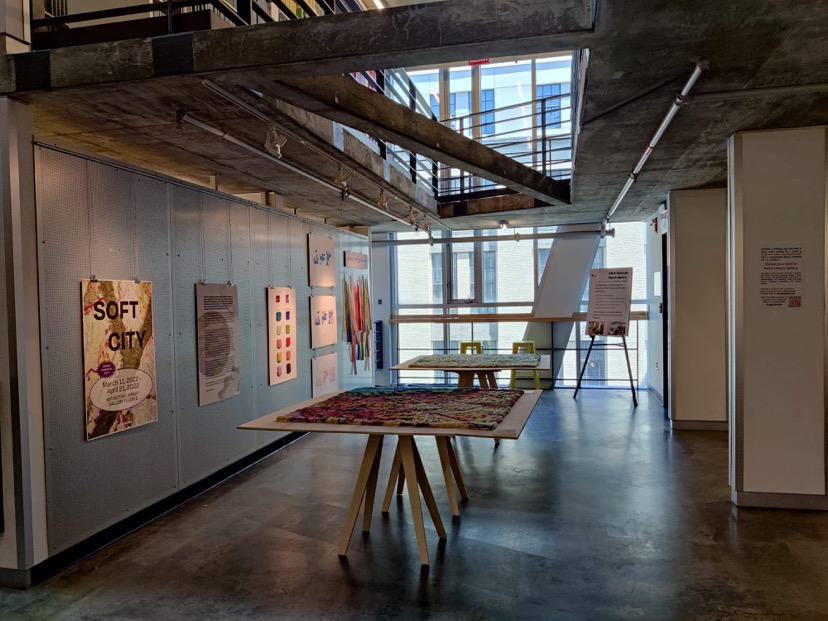
Soft City
2021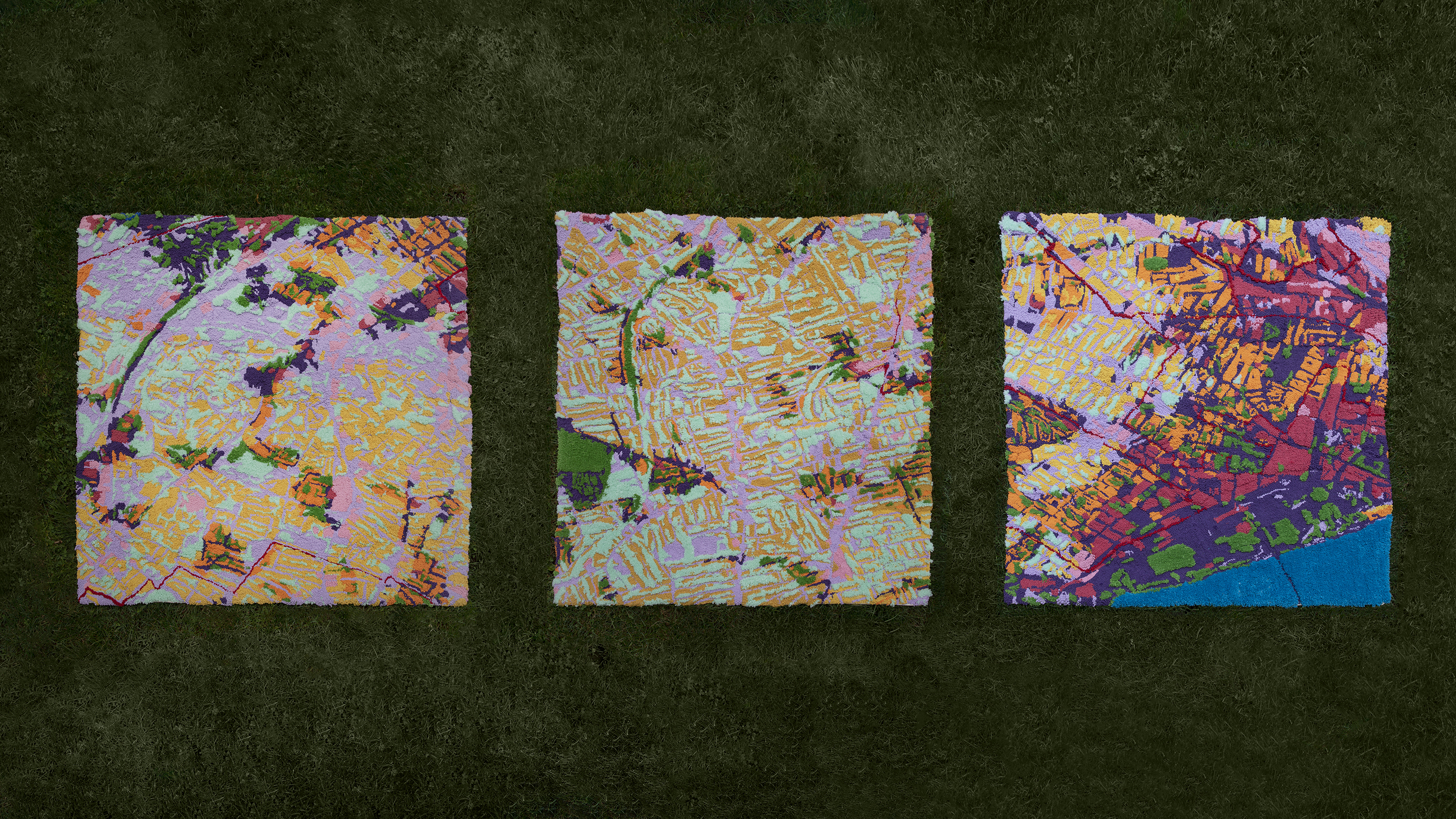 Roxbury, Dorchester, and East Cambridge
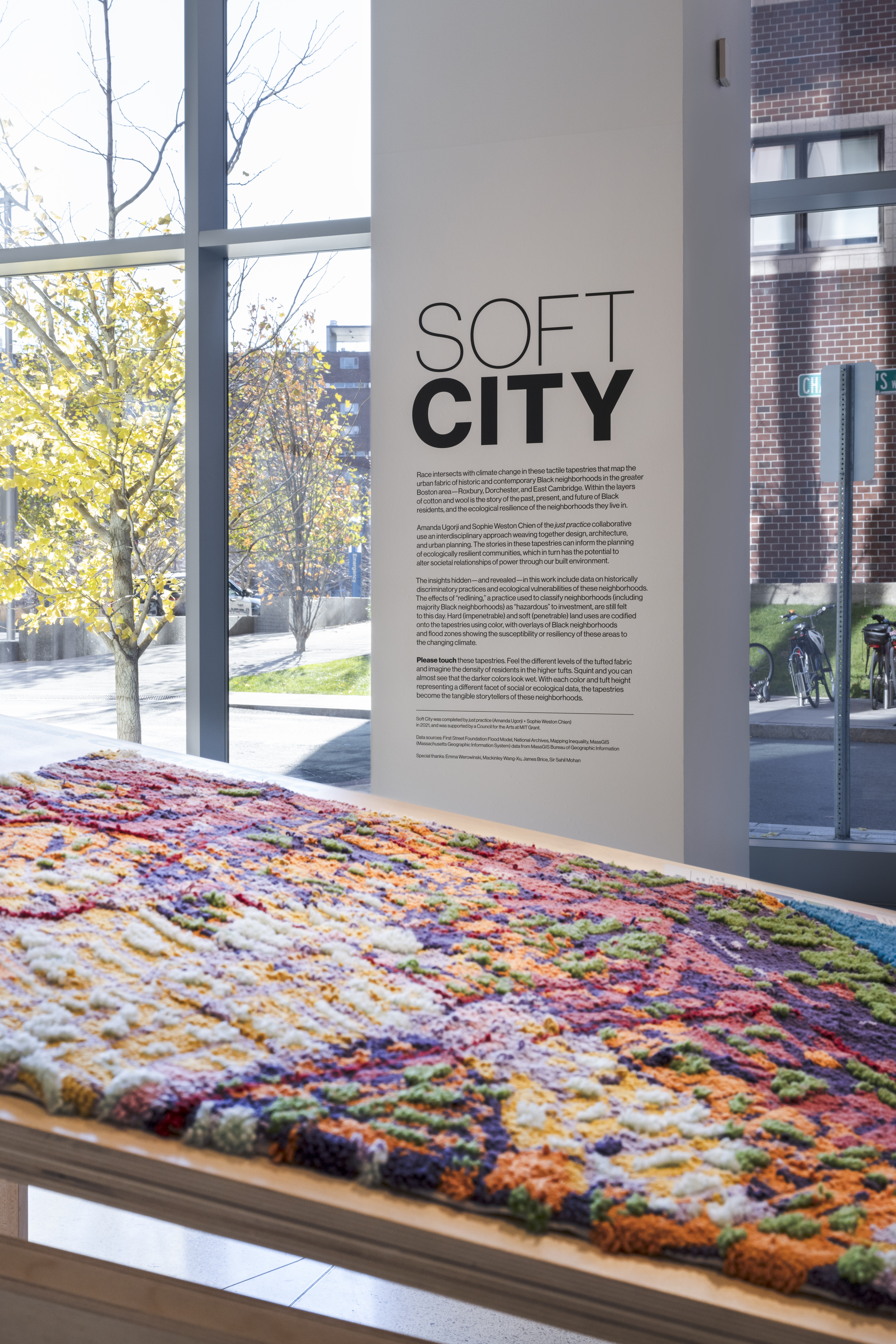
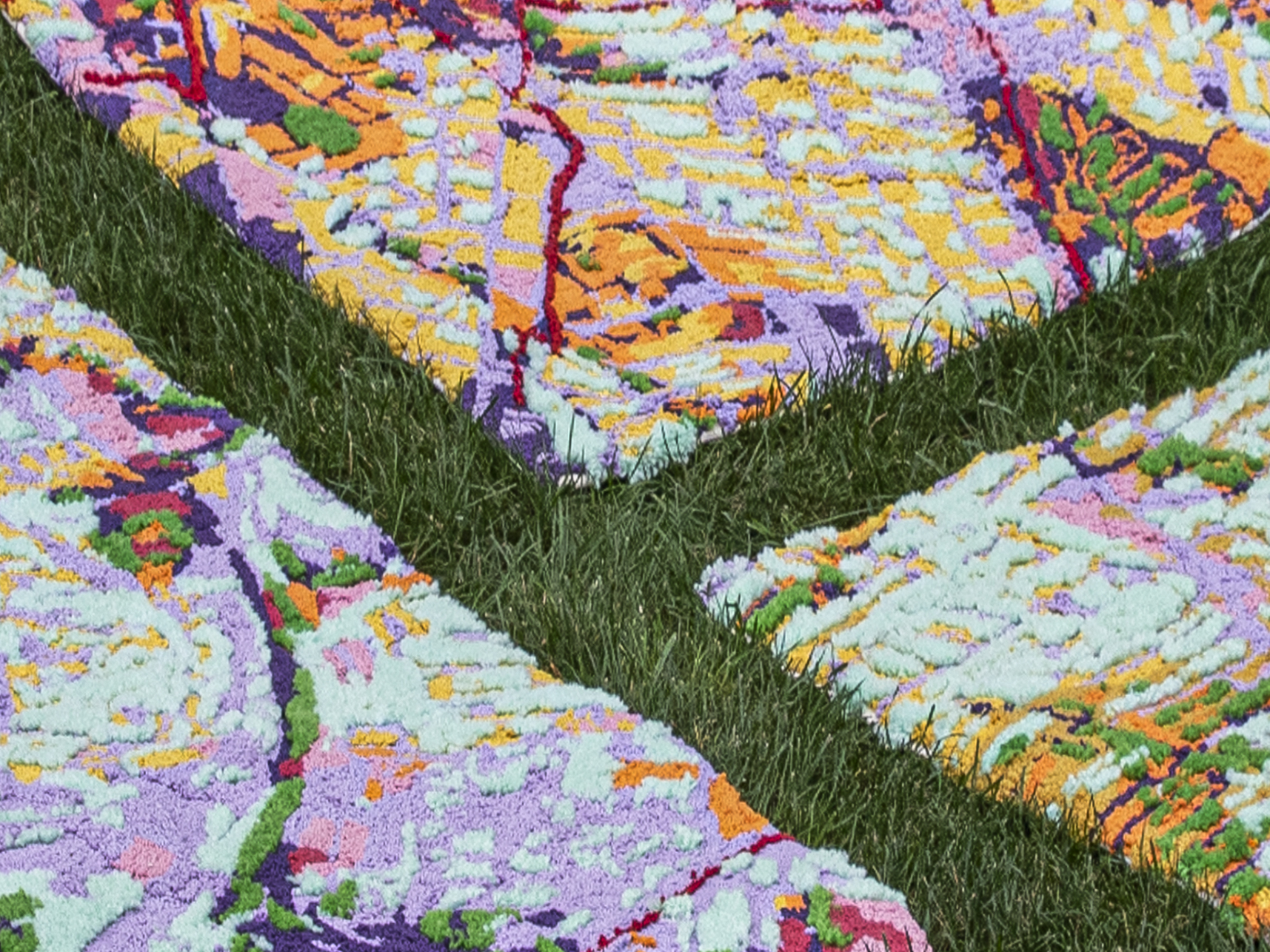
Soft City is a large-scale textile series that maps the urban fabric of Black neighborhoods in the Boston area. The tapestries map historic (redlined) and contemporary Black neighborhoods, including Roxbury, Dorchester, and East Cambridge. The information mapped tells the story of the past, present and future of Black residents, and the ecological resilience of the neighborhoods they live in. Hard (impervious) and soft (pervious) land uses are codified using colors with overlays of Black residents and flood zones on the tapestries. The softness and materiality of tufting interrogates the traditional top-down approach to space planning and management in the city and offers new tactile ways to explore our understanding of urban space, at all ages.
We sourced our data from First Street Foundation Flood Model, FEMA, Climate Ready Boston, and the US Census.
We sourced our data from First Street Foundation Flood Model, FEMA, Climate Ready Boston, and the US Census.
Supported by MIT Council for the Arts. Special thanks to Emma Werowinski, Mackinley Wang-Xu, James Brice, and Sir Sahil Mohan.
Soft City: East Cambridge is in the permanent collection of the MIT Museum and Roxbury + Dorchester are being stewarded by Carriage House for the Arts.
We were profiled by Thuy-An Nguyen
![]()
Soft City: East Cambridge is in the permanent collection of the MIT Museum and Roxbury + Dorchester are being stewarded by Carriage House for the Arts.
We were profiled by Thuy-An Nguyen







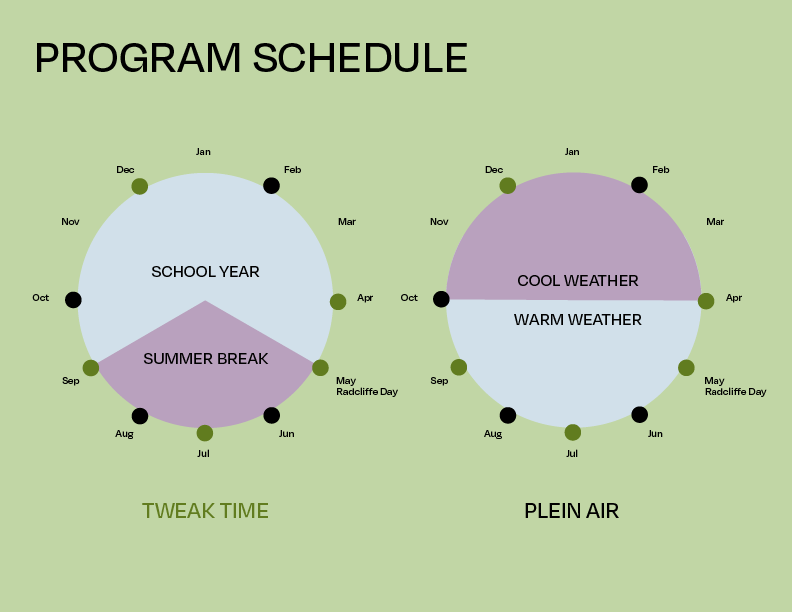
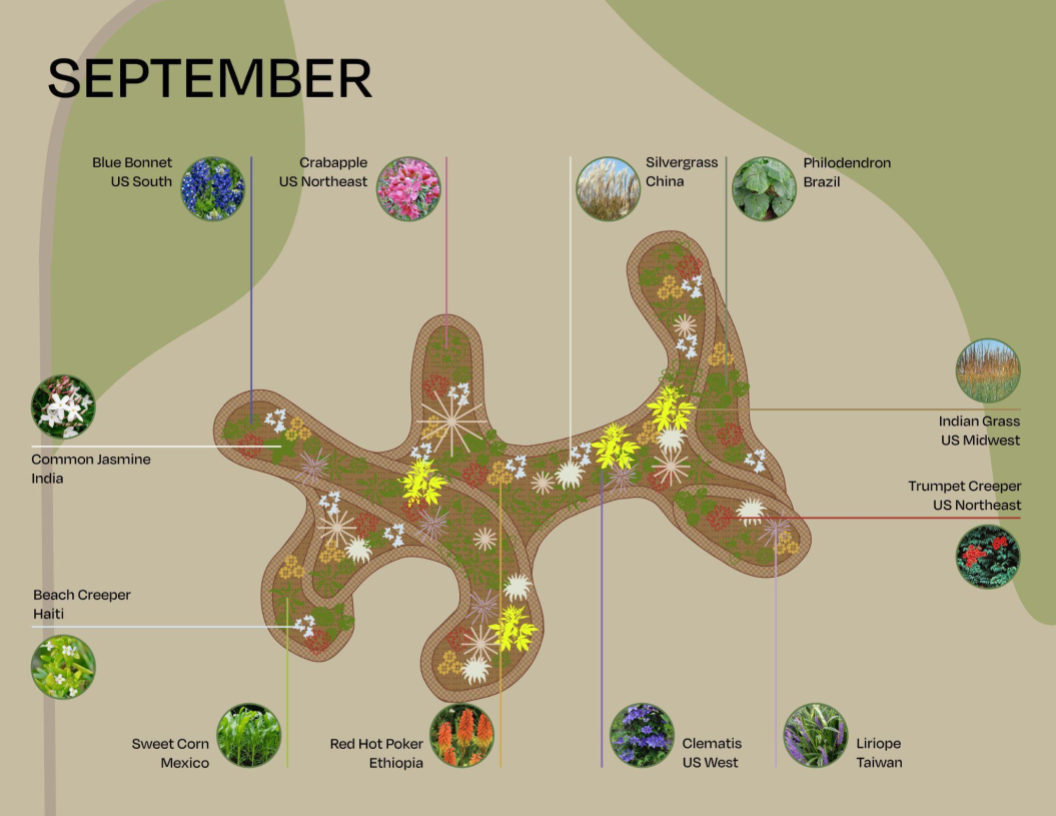
Passing On is an ecological installation that honors the labor of building stories. Over the 18 months, various foliage literally exterts labor by growing within the spatial conditions of the Radcliffe campus. Through a diversity and maturity of local and internationally cultivated plants, flora describes the diverse “ecosystem” of Boston in 2023.





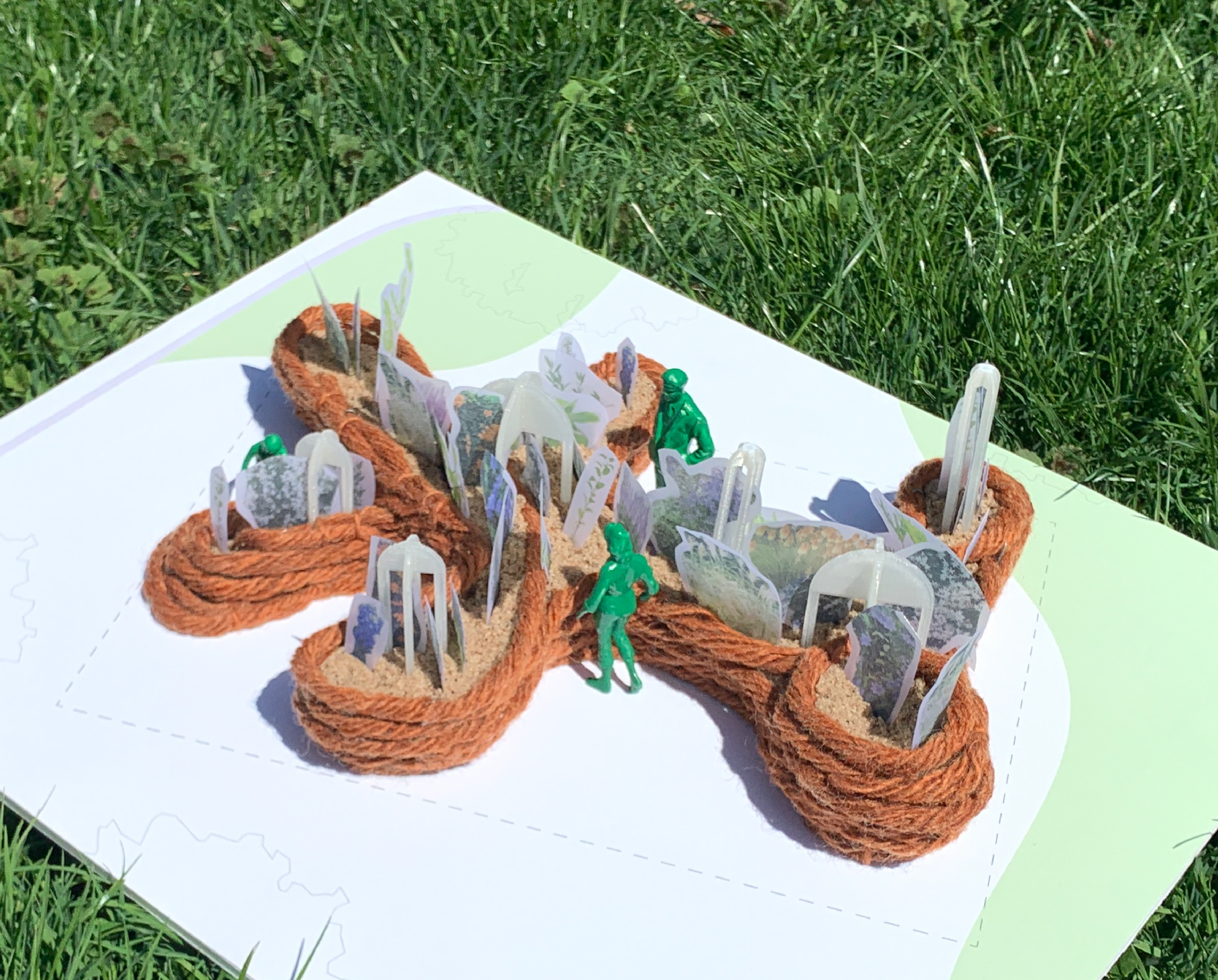
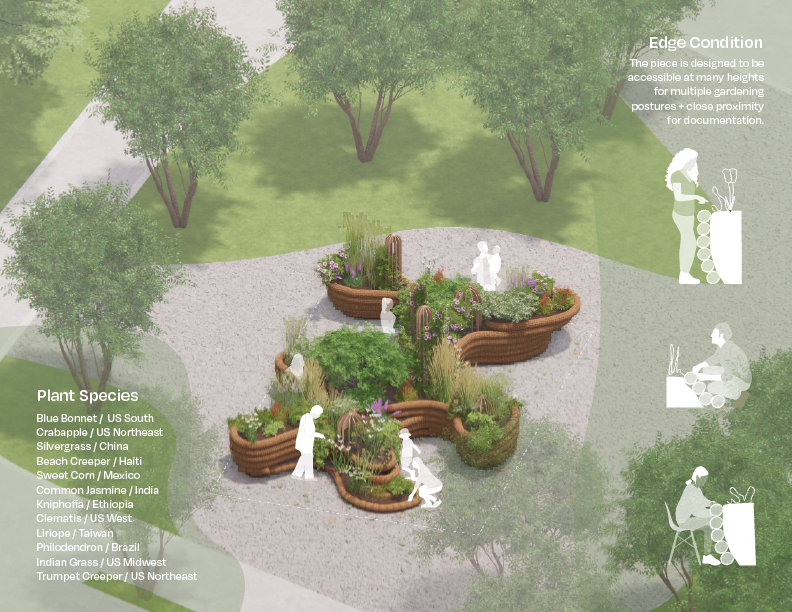
The project
explores how history is constructed through four concepts–the act of recording,
creating a snapshot of story; growing narratives, acknowledging that narratives change
and evolve over time; environment, situating the context of the narrative itself; and
influencing, allowing historians to change the perspective and focus of the narrative.
just practice
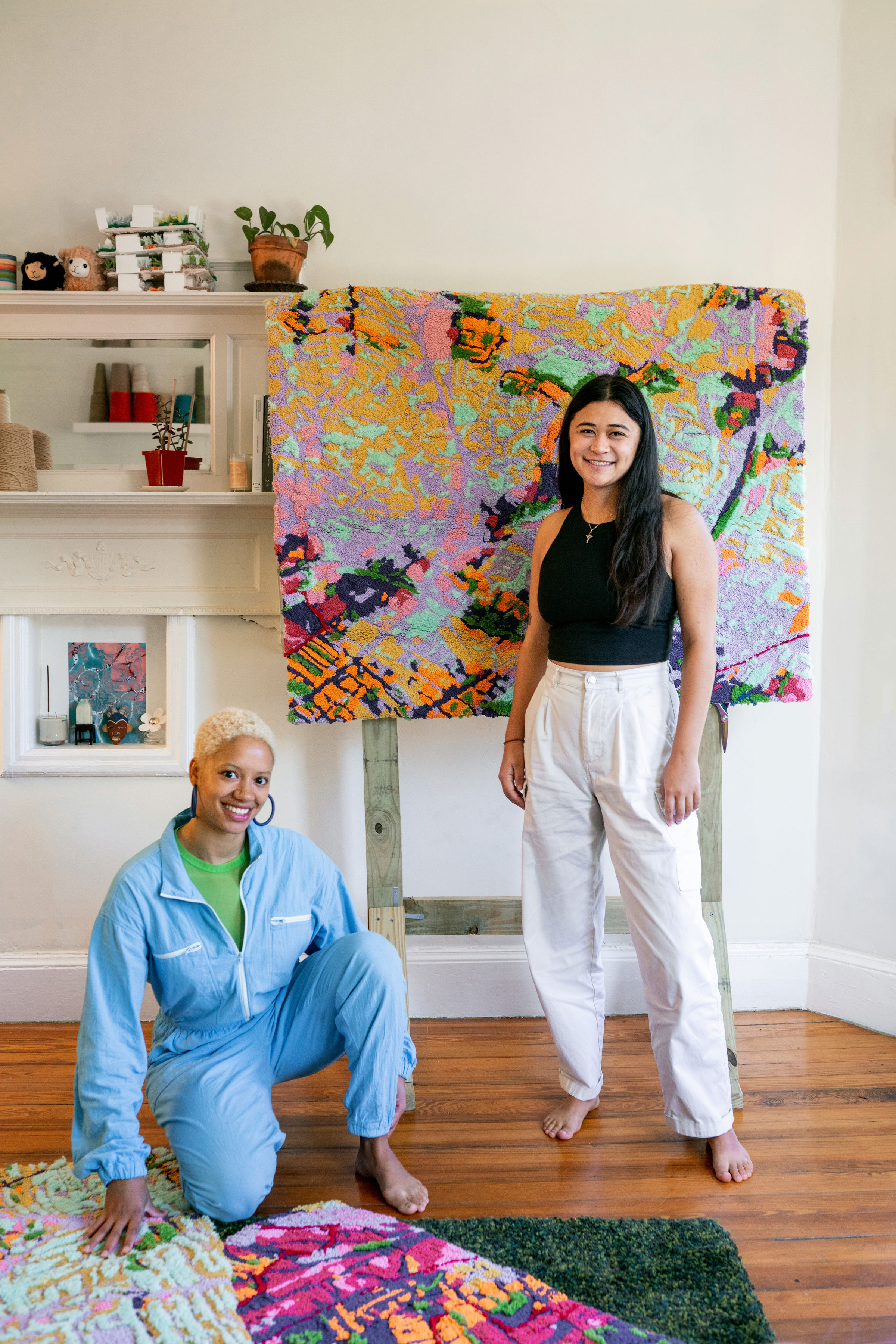
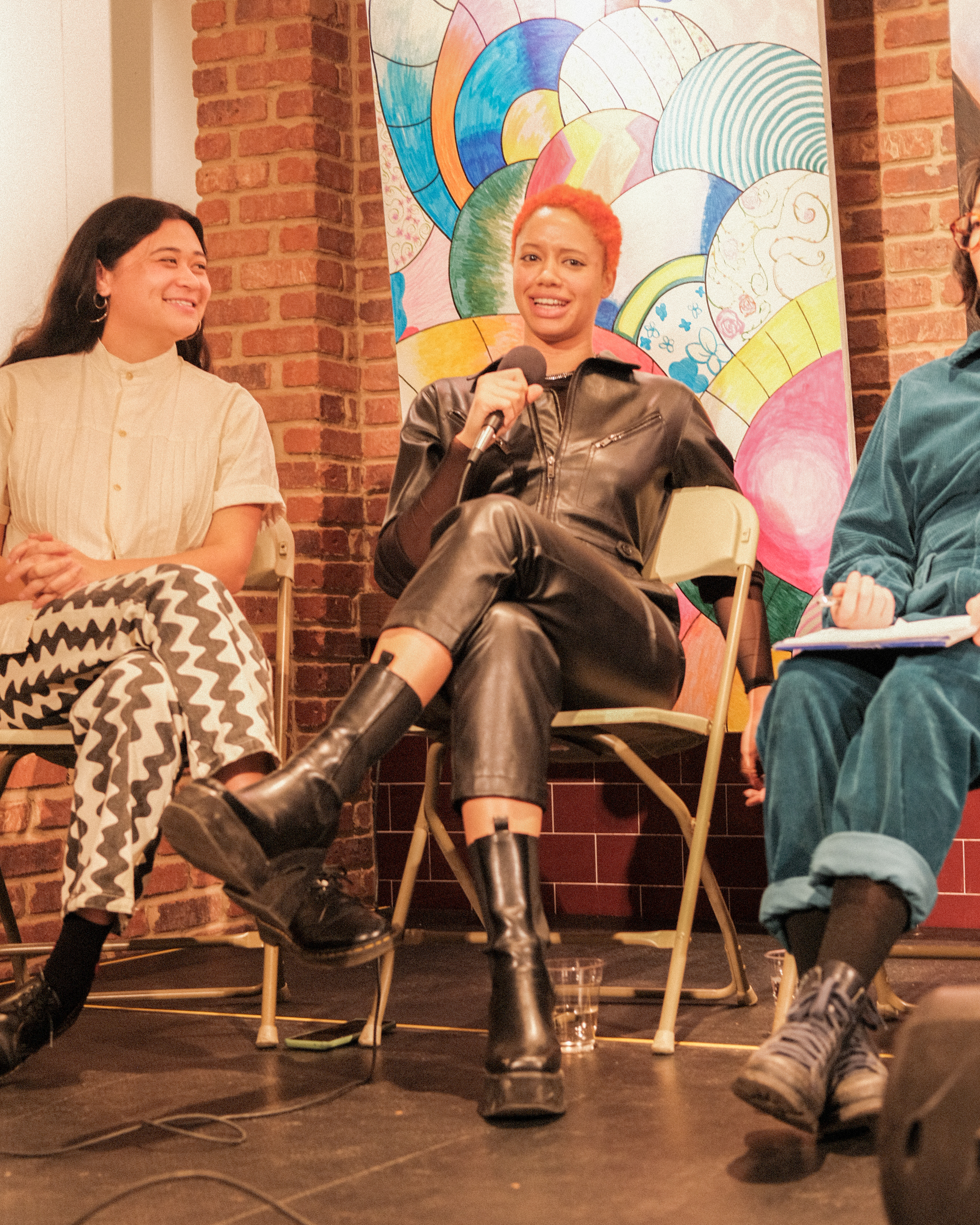
just practice spans architecture, landscape architecture, urban planning, community engagement, textile, and graphic design, as well as activist and organizing work within the design field. We think about modes of practice, the spatialization of memory, Black feminist practices, the historical role of women in architecture, and strategies for collective care. We have exhibited at the MIT Museum, Boston Public Library Leventhal Map Center, MIT Rotch Architecture Gallery, Yale School of Art E.I.K. Gallery, Northeastern University 360 Gallery, and Boston Society of Architects Gallery, with upcoming shows at Boston City Hall and Mills College Art Museum. We have lectured at Middlebury College as Cameron Visiting Architects and gave the 2026 McKeown Lecture at the University of Oregon. Soft City was awarded the inaugural City Talks Digital Gallery Award from the Spatial Analysis Lab at USC. Soft City: East Cambridge is in the permanent collection of the MIT Museum and Soft City: Roxbury + Dorchester are being stewarded by Carriage House for the Arts.
Sophie and Amanda met in Providence, RI, and work across New York and Colorado.